23/10/2026
LOADING ARMS FOR EXTREME TEMPERATURES
The transfer of fluids at particularly high or low temperatures requires solutions designed to meet specific operating conditions. In these applications, loading arms must ensure reliable operation even under significant thermal stress, while taking into account process requirements and operator safety.
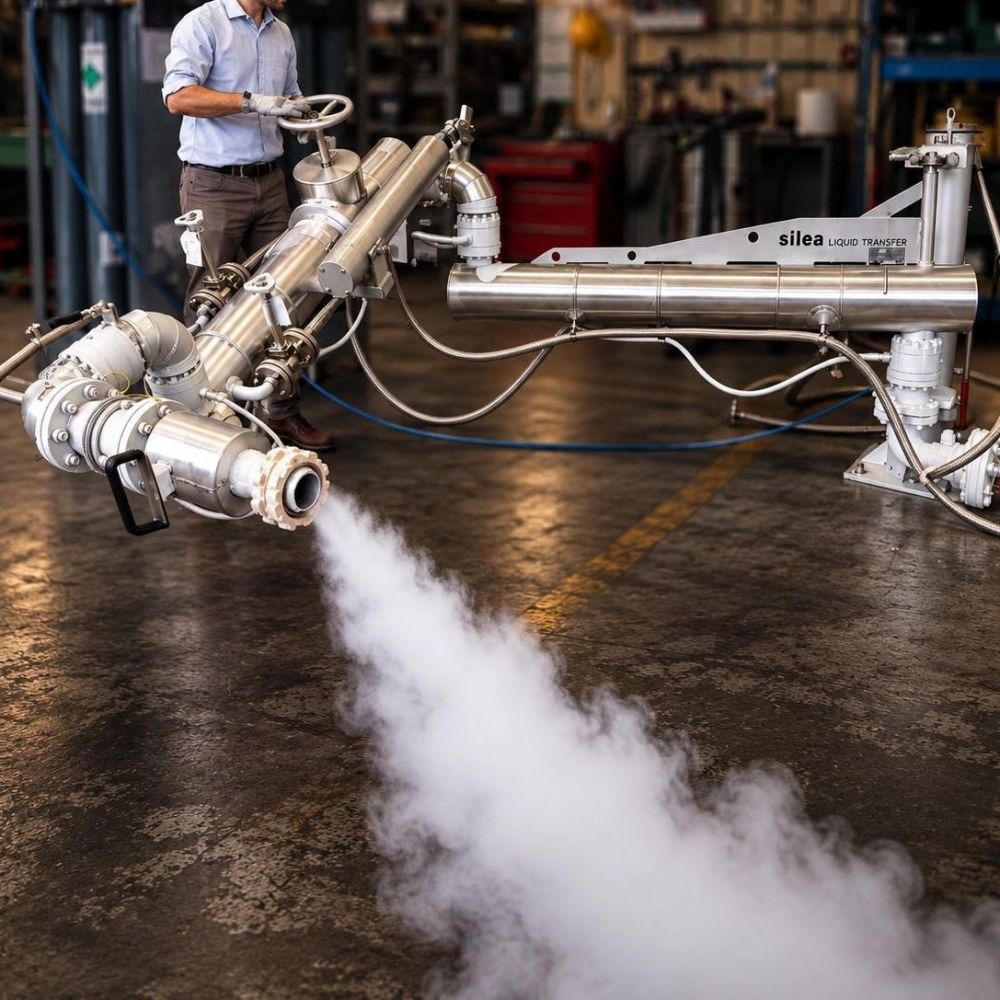
Silea manufactures loading arms for high-temperature applications up to +200 °C, as well as cryogenic solutions designed to handle fluids at temperatures as low as −170 °C. These two distinct operating environments require specific technologies and engineering measures.
High-temperature applications: heating and thermal insulation
When transferring high-temperature fluids, it is important to limit heat loss and help maintain the conditions required by the process. For these applications, Silea offers two main heating systems:
Electric heat tracing: an electric heating system applied to the loading arm to maintain the required temperature.
Steam jacket: a solution that uses steam circulating through a heating jacket.
In both cases, the loading arm is thermally insulated to reduce heat loss. Insulation also serves a safety function by limiting the risk of operators accidentally coming into contact with high-temperature surfaces.
Fixed or removable insulation
The choice of insulation system also depends on the plant's maintenance requirements. Fixed insulation, generally made of rock wool with an outer aluminium or stainless steel cladding, is the most common configuration.
Alternatively, removable insulation can be used, allowing the insulation to be easily removed and repositioned. This solution is particularly useful around the joints, where it provides easier access to components during inspection and maintenance operations.
Cryogenic applications: reliable operation down to −170 °C
Cryogenic applications present different requirements. In this case, the loading arm does not generate cold; instead, it is designed to operate correctly at the temperatures specified by the plant, which can reach −170 °C.
To operate under these conditions, Silea uses specific technical solutions, starting with the seals at the swivel joints. These technologies, derived from the aerospace industry, are designed to ensure that the components continue to function correctly even at extremely low temperatures.
Gaseous nitrogen circulation to prevent ice formation
The temperature difference between the external environment and the inside of the loading arm can promote condensation. In cryogenic applications, moisture can freeze, leading to ice build-up that may compromise component operation and cause damage.
To prevent this phenomenon, the loading arm must be equipped with an internal gaseous nitrogen circulation system, which helps remove any residual moisture and reduce the risk of ice formation.
Insulation can also be provided for these applications. However, its role differs from that of insulation used for high-temperature applications: its primary purpose is to protect operators from accidental contact with extremely cold surfaces, rather than to help maintain the temperature of the product.
Solutions designed around operating requirements
From high-temperature to cryogenic applications, fluid transfer requires careful consideration of operating conditions, heating and thermal management systems, materials, and safety and maintenance requirements.
For this reason, Silea develops customised loading arm configurations tailored to the specific needs of each plant and the characteristics of the fluid being transferred.