26/11/2026
BRINGING AI INTO SILEA
Ask an AI assistant how long it takes to deliver a Silea loading arm. It will answer immediately and confidently, providing a precise and plausible lead time in weeks. There's just one problem: it doesn't know. The answer may sound reliable, but it has no verified basis.
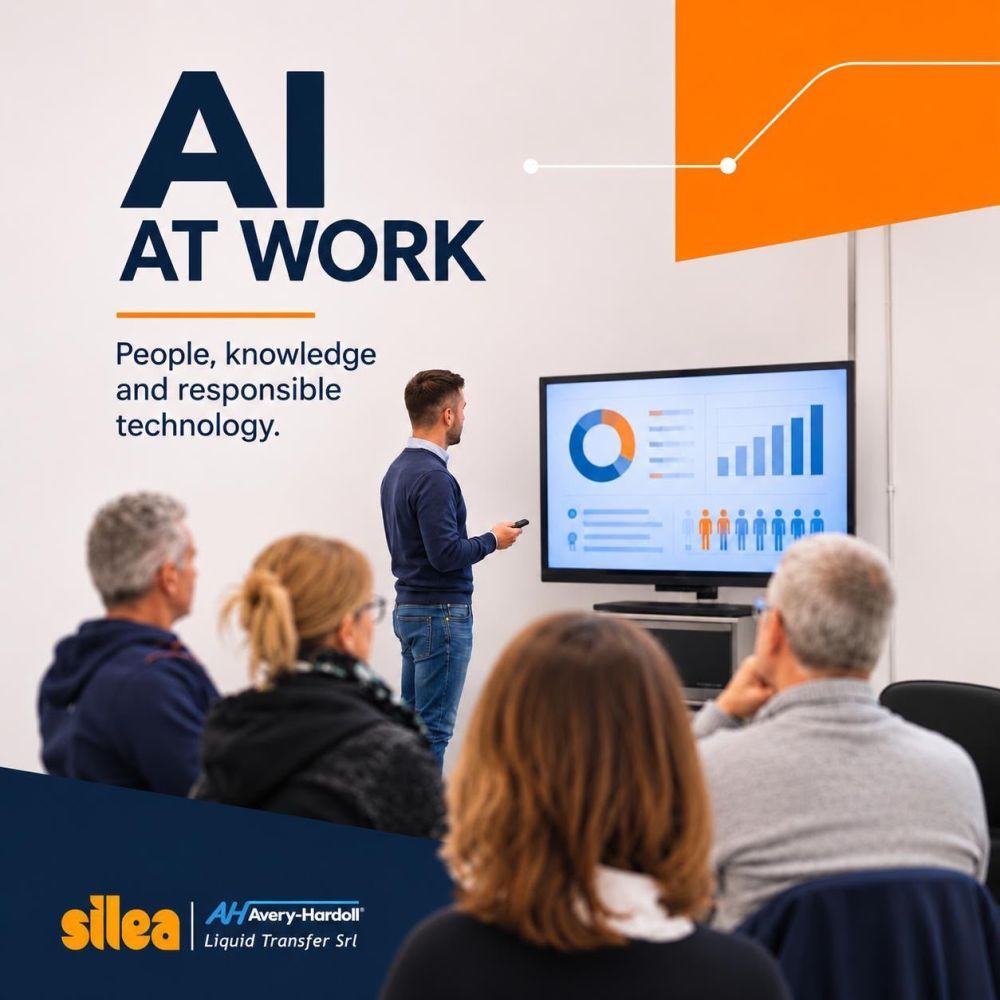
This was the starting point for the training session Artificial Intelligence at Work, held on Thursday, November 12, by Nouvelle Srl, an IT company based in Modena.
The question is simple only on the surface: how can we use a tool that is already becoming part of our everyday work effectively and safely?
A system that writes, not a search engine
The first thing to understand is that an AI assistant doesn't search for information: it generates new text, choosing the most likely word one after another. Probability, not verification. That's why its tone remains confident even when it's wrong, and why "it sounds right" is not a reliable way to check information.
It has read a great deal, but it hasn't read Silea's internal documents: it doesn't know our customers, our products or our procedures.
Three takeaways for everyday work
• Check facts at the source
Measurements, figures and technical data must come from the right document, not from a chat. AI can help write the answer; a person is responsible for providing the correct figures.
• For work, company accounts only
What matters most is using a company account, so that customer and supplier data, prices and confidential documents remain protected.
• AI writes the first draft. We take responsibility for the final version
Anything issued in Silea's name must be read, understood and checked by a person. Always.
Training as an investment in trust
Artificial intelligence offers practical opportunities to simplify many everyday tasks, from writing emails and summarising lengthy documents to assisting with translations. But to make the most of these benefits, it is equally important to understand the limitations and risks involved.
Training therefore becomes a key step, helping employees understand the potential of these tools, identify the most suitable ways to use them and adopt the necessary precautions when handling information.
This is the approach taken by Silea, which has always placed great importance on trust with its employees and partners. The company has chosen to invest in a dedicated training programme, tailored to its specific needs and working environment, to help people integrate AI into their daily activities. An opportunity to overcome initial reservations, build greater awareness and learn how to use these tools effectively and responsibly.
Method first, tools second
Tools change quickly; the method doesn't: ask precise questions, check, correct and only sign off on what you are prepared to stand behind. For a company that designs systems for the safe transfer of liquids, this is a familiar principle: technology provides support, but responsibility remains with people.
For those who work with us, this means one simple thing: behind every answer, there is someone who has checked it.