21/09/2026
1403T CONFIGURATION FOR THE CHEMICAL INDUSTRY
How Silea adapted the technology of the 1403 series to handle a corrosive product through a more practical bottom loading system designed for frequent use.
In the chemical industry, choosing a loading system depends on more than just the type of operation to be performed. Product characteristics, loading frequency and handling requirements are all factors that need to be considered when designing the right solution.
This was the case for a customer handling a chromium-based industrial liquid who needed to carry out bottom loading into road tankers through a DN50 (2”) line. Until then, the operation had been performed using a simple hose. A functional solution for a limited number of loading operations, but one that became less practical as loading frequency increased.
This led to the need for a more structured system: a loading arm designed for bottom loading and specifically configured to handle a corrosive product.
When a hose is no longer the most practical solution
The increase in weekly loading operations led the customer to consider a different solution for managing the loading process. When filled with liquid, a DN80 hose can become significantly heavy and must be handled directly by the operator. As loading frequency increases, this becomes particularly relevant in terms of ergonomics and practicality.
Switching to a loading arm, on the other hand, means relying on an articulated and balanced structure designed to support the operator's movements when connecting to the tanker. The challenge, however, was not only operational.
The liquid being handled is corrosive, meaning that the parts in contact with the product needed to be adequately protected. The solution therefore had to combine the requirements of bottom loading with an internal configuration compatible with the fluid.
From the 1201T series to the new 1403T configuration
Silea already had specific experience in manufacturing loading arms with an internal PTFE lining, developed through the 1201T series for top loading applications. In this case, however, the customer needed to carry out bottom loading.
The starting point was therefore the 1403 series, designed for bottom loading applications. Silea's R&D team transferred the PTFE lining technology already developed for top loading arms to this configuration, adapting it to the requirements of the application.
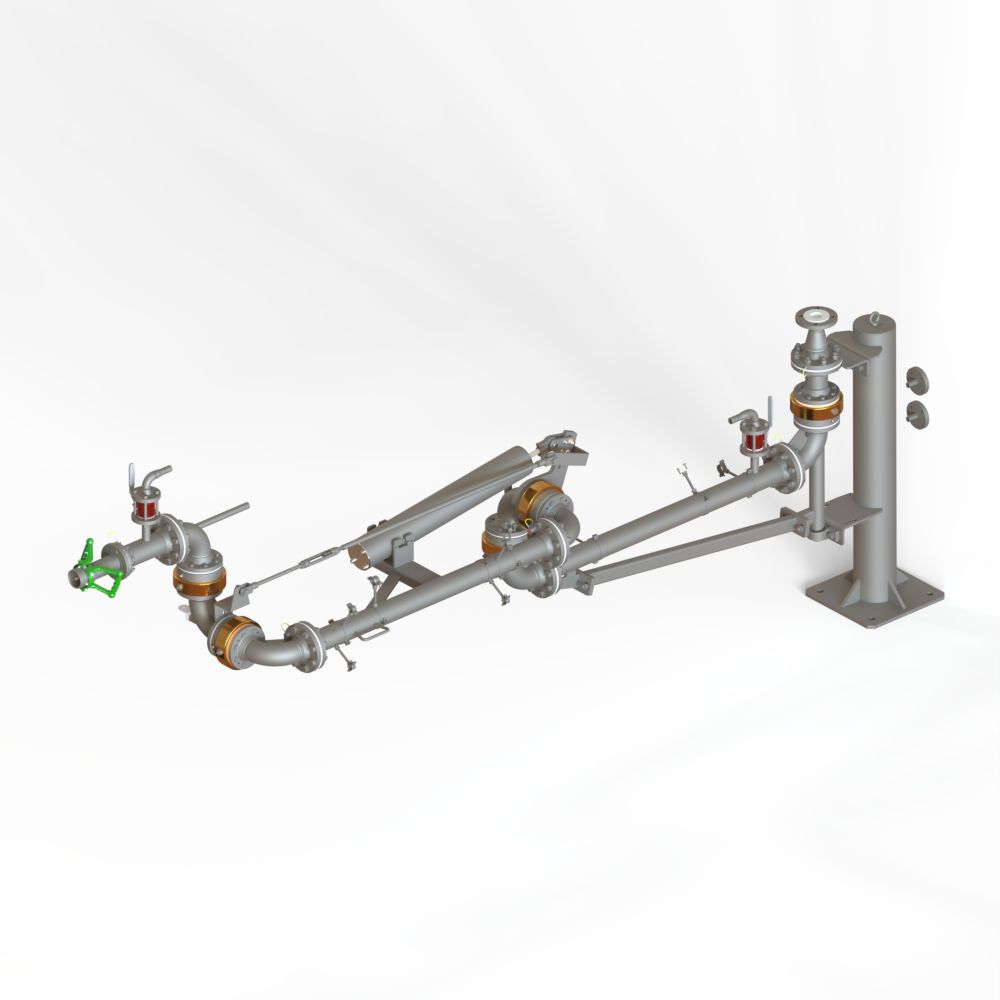
The result is the 1403T configuration: a bottom loading arm made of stainless steel and featuring an internal PTFE lining on the parts in contact with the corrosive product. The project is therefore an example of custom engineering based on established technologies: rather than developing a completely new product, an existing solution was adapted to a different loading method and specific application requirements.
Stainless steel and internal PTFE lining
The 1403T configuration combines the structure of a bottom loading arm with a solution specifically designed to handle corrosive products. The arm is made of stainless steel, while the internal surfaces in contact with the fluid are lined with PTFE (Teflon™). The lining provides an internal surface suitable for the application while maintaining the arm's mechanical configuration.
From an operational perspective, the system retains the typical characteristics of a loading arm: articulated, balanced and designed to be moved by the operator during connection to the tanker. This means that handling no longer depends directly on the weight of a hose filled with product.
Greater practicality for loading operations
The result is a system that addresses the two main requirements of the project at the same time: compatibility with the corrosive product and greater practicality in managing loading operations.
The 1403T loading arm allows operators to:
•carry out bottom loading through a DN80 (3”) line;
•use an internal PTFE lining on surfaces in contact with the product;
•facilitate handling thanks to its articulated and balanced structure;
•reduce the need for the operator to directly handle a DN80 hose filled with liquid, making the operation safer;
•have a solution designed around the expected frequency of loading operations;
•adapt existing technology to a custom configuration for the chemical industry.
The project therefore went beyond simply replacing a hose, making it possible to rethink the loading system around how the operation would be managed over time.